


Stop blogging and start publishing
Why the wellness brands customers trust in 2027 will be the ones that own their story, and how to build a content engine that keeps the reward going.
When we first wrote this article in 2024, the advice was simple: blog consistently, rank on Google, and the traffic will come.
That advice has aged badly.
As The State of Brand put it in July 2026, “The B2B blog is collapsing. The companies replacing it are becoming publishers.” The numbers behind that headline are hard to ignore.
The numbers behind the shift
- Fewer than one in three Google searches now ends in a click to any website, as AI overviews answer the question on the page.
- Google search traffic to publishers fell 33% globally in the year to November 2025.
- HubSpot, the company that more or less invented the inbound blog, has lost around 80% of its organic blog traffic (and, tellingly, kept growing revenue through newsletters, podcasts and video instead).
- And social isn’t the safe harbour it used to be: LinkedIn company page posts now reach roughly 1.6% of followers, down from 7% in 2021.
So is blogging per se dead? Not entirely. However the blog, written to please an algorithm, is. In the words of that same article:
“the blog was optimised for machines, and the publication builds for people.”
The State of Brand, July 2026
What’s replacing it is something much, much more valuable, and it suits wellness, health and tourism brands better than anyone: a publication built for people.
Information is freely available. What does that mean for the lived experience?
AI can summarise ten thousand books at lightning speed (hot tip: watch your token count though). However it can’t sit with a client on the day they finally feel like themselves again. It can’t tell you what the light looks like on the third morning of a retreat program, or what a nervous first-timer asked you at the door.
When information is endless, it kinda loses its value. What becomes scarce, and therefore precious, is lived experience: a perspective only one can hold, shaped by what they have seen, done and felt.
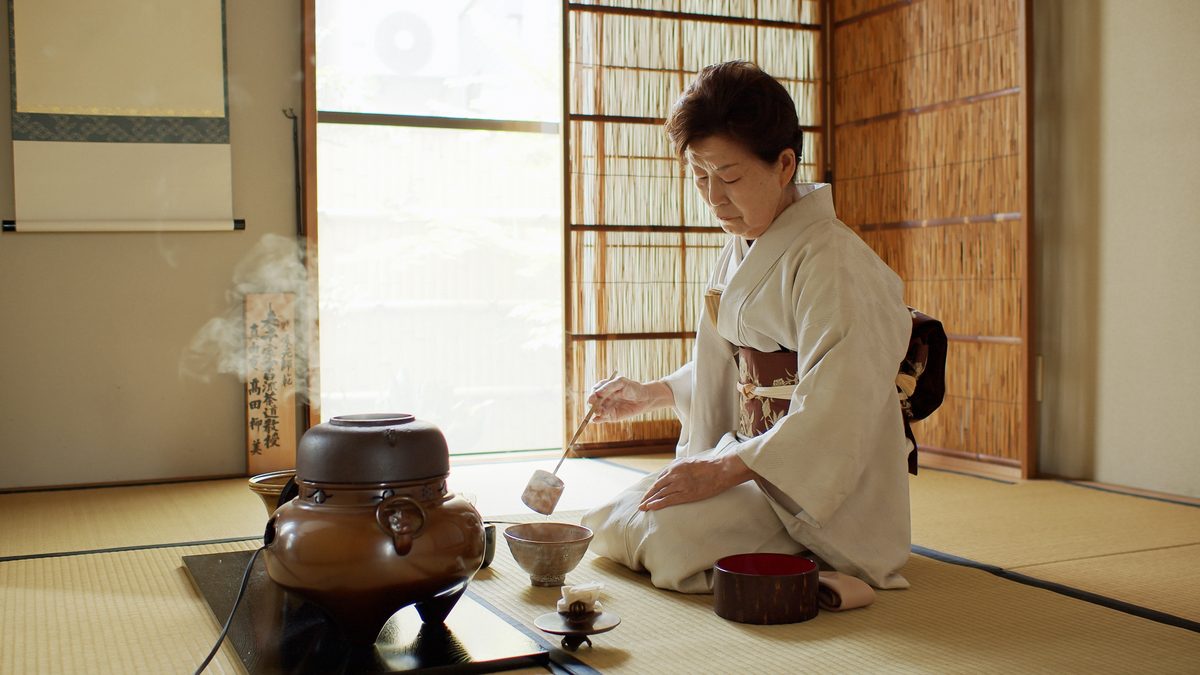
That is exactly what wellness businesses have in abundance. Your practitioners. Your guests. Your hosts. Your own story. Nobody else has those voices, and nobody can generate them.
People are actively looking for them too. Nearly 74% of people now name social media as their least-trusted environment, and only 22% trust social media companies at all, according to the Human Clarity Institute’s digital trust report. Daily time on social peaked in 2023 and has been falling since, as feeds fill with AI-generated posts and paid promotions. People haven’t stopped reading. They’ve stopped trusting content that doesn’t feel human.
Owned, earned, rented and paid
It helps to think about your marketing channels in four groups:
Owned
Your website, your journal and your email list. You control the rules and the relationship. An algorithm change can’t take them away, and they grow in value the longer you invest in them.
Earned
What happens when your stories are good enough that others share, reference and recommend them without being asked. Press, partner shares, backlinks and AI search answers all count. You can’t buy it, which is why people believe it.
Rented
Instagram, LinkedIn, Facebook and YouTube. Essential for reach and discovery, but the platform decides who sees your work, how often and at what cost.
Paid
Ads and sponsored content. Useful, but the moment the spend stops, so does the exposure.
Most small wellness businesses have this upside down. Everything lives on rented channels, topped up with paid, and the website is an afterthought.
But what if we flip it? What if every piece of content lives on your website first. Social, email and ads exist to bring people back to it, and from there onto your list. Your journal is the engine room. Social is the street outside. You want to meet people on the street and invite them in for a collagen water.
Owned media creates the conditions. Earned media is the reward.
This matters even more in wellness, because of how people choose. According to the Global Retreat Report 2026, word of mouth is the leading way people find a wellness experience (56%), followed by social browsing (44%), Instagram (41%) and a practitioner they already follow (34%). Google sits at 27%.
The two strongest channels can’t be bought. They’re earned.
A strong library of owned stories is what makes them possible. The more you publish, the more it gets shared. The more it’s shared, the more it’s found. The more it’s found, the more it’s cited, by journalists, partners and, increasingly, AI tools like ChatGPT, Perplexity and Google’s AI Overviews. Over time, you become the business guests seek out, rather than the one chasing them.
So are some of the best wellness brands introduced, not advertised?
Build a content engine, not a content calendar
A content calendar is an Excel list of posts to fill. A content engine (some call it a flywheel) starts with one strong piece and lets it power everything else.
One cornerstone piece, with many channels
- The article (an interview, a guest story or a practitioner Q&A) goes live on your website first
- A pull quote becomes an Instagram post
- The key insight becomes a LinkedIn post
- A hook and summary go out to your email list
- The key points become a carousel the following week
- Your team gets talking points, so the story turns up in real conversations with customers.
Structured well, one idea can carry 30 to 60 days of content. For a small team, that’s the difference between burning out and building momentum. That’s a social responsibility we understand after many years of digital burnout from content creation.
A simple rhythm that works:
- Plan: choose one story a week or fortnight, give it a theme, and link it to an offer or next step.
- Produce: interview, draft, edit, approve. Pick the pull quote, the key stat and the social hook before you publish.
- Publish: on your website first, with a proper meta description and clear headings.
- Share: the same week, across email, social and your team.
- Repurpose: the following week, as a carousel or an “in case you missed it” in your next email.

Write for people, and AI will follow
Here’s the good news about AI search. The content it favours is exactly the content wellness brands are best placed to create. Generative engine optimisation (GEO) is the practice of making your content easy for AI tools to find and quote, and they tend to surface pieces that are:
What AI search tends to surface
- Specific and authoritative: named experts, real quotes and actual numbers, not generic listicles
- Question-led: interviews and Q&As map neatly onto the questions people type into ChatGPT
- An original source: your interview with your practitioner exists nowhere else. That’s a real advantage
- Deep and well-structured: clear headings, real substance and a body of work on the topics you want to be known for.
Think about what your customers actually ask: “Is a retreat worth it if I’ve never done one?” “What should I expect after a week of deep rest?” “How do I keep it going once I’m home?” Answer those properly, in your own voice, and keep going. One article won’t do it. However a library will.
Stories connect. Structure clarifies. Results build certainty.
Stories don’t always sell on their own, but they do connect. When a reader sees themselves in someone else’s story, they glimpse what’s possible for them, and that’s where a relationship begins.
Think of it as the architecture of trust:
The story
creates the connection
The structure
creates clarity
The results
create certainty
A simple storytelling structure we come back to
Credit: Adam Robinson
Sadly we learnt a few days ago that Adam Robinson and his family passed away in a tragic plane crash. Sending thoughts and love to his family during this awful time.
- Hook: something emotional, surprising or straight-up bold
- Problem: something your reader can relate to
- Story: a real-life moment
- Shift: how you, or your customer, reframed the issue
- Call to action: what to do next.
Keep publishing after the booking
Most content stops at the sale. But the moments that decide whether someone comes back, and whether they tell anyone, happen after that.
The follow-through gap
In wellness travel research, post-experience support is the lowest-rated part of the category, at just 4.1 out of 10, with 61% rating it poor. Yet intent to return sits at 7.3 out of 10.
The loyalty is there. The follow-through isn’t.
Your publication can help close that gap:
- “Now you’re home” guides that help people keep going once the program ends
- Answers to the questions that surface a month later, when ordinary life has settled back in
- Guest stories, with permission, in their words rather than yours.
This is content as care. It’s also the most honest marketing there is, because the people telling the story are the ones who lived it.
Measure what builds trust
Likes and follower counts feel good, but they don’t tell you whether your content is doing its job.
| Vanity metrics | Impact metrics |
|---|---|
| Likes | Saves and shares |
| Followers | Return customers |
| Video views | Referrals |
The single most useful number is content-assisted enquiries: how many people read at least one of your articles before they got in touch or booked. That’s what shows your publication is a business asset, not a brand exercise. Tag every link you share (UTM tags in Google Analytics make this simple) so you can see which stories bring people in.
Give it time, too. Waiting for perfect attribution before you believe in the asset is how businesses give up just before it starts to work.
A word on AI
We use AI for ideas, research and checking our work. We don’t use it to write the story. The whole point of a publication like this is that it sounds like you, because it is you. That’s the one thing no tool can copy.
Where your publication fits in the SET Approach
At enKompass, every piece of content sits inside our signature model: Strategy + Experience + Transformation = Trust.
- Strategy: knowing your customer and mapping their journey, so you know which questions to answer, which stories to tell and which topics to own
- Experience: designing every touchpoint with care. Your content engine lives here, alongside your welcome emails, events, programs and booking systems
- Transformation: creating the conditions for lasting change, with follow-through content, community and measurement, so you can show results rather than simply claim them
When the three work together, your content stops being a task on the to-do list. It becomes how customers find you, feel looked after and come back with a friend.
Five things to do this month
- Move your best content onto your website first, and point every social post back to it.
- Give every article one clear next step, ideally joining your email list.
- List the ten questions customers ask you before and after they book.
- Book one interview: a practitioner, a guest or a host. Turn it into a month of content.
- Start tracking content-assisted enquiries, and check back in 90 days.
Ready to build something you own?
We help health, wellness and tourism brands design the whole customer experience, not just the content. If you’d like a content engine built around your customer’s journey, from first scroll to long after they’ve gone home, we’d love to hear what you’re building.


-

I also belong to the Field School of Hvar
Four slow weeks on Hvar, a worldschooling program and one seven-year-old’s reflection: what place-based learning taught my family about belonging and ...
-
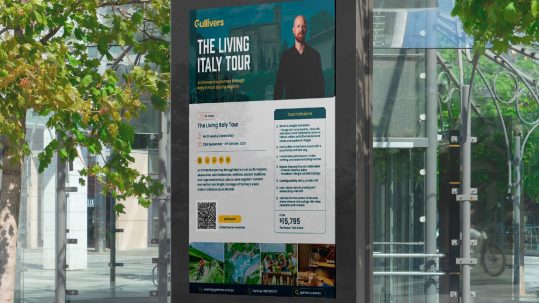
Case Study: Building a Marketing Function from the Ground Up: Gullivers Australia
How Gullivers Australia went from no marketing team to a new brand, eCommerce site, CRM and owned-media publication in under two years. A case study....
-

Stop blogging and start publishing
Why the wellness brands customers trust in 2027 will be the ones that own their story, and how to build a content engine that keeps the reward going....